
If you are looking for a beautiful and unique addition to your home, look no further than the variegated rubber plant! This plant is sure to catch everyone’s eye with its striking leaves. It is a great way to add some life and color to any room. In this blog post, we will discuss the care and maintenance of the variegated rubber plant. We will also provide tips on how to keep your plant healthy and thriving!
What is a variegated rubber plant?

A mottled rubber plant is a species of rubber tree whose leaves have white or cream veins or patterns. Petrolifolia can occur naturally or be the result of a mutation. The plant is native to Southeast Asia and is a popular indoor plant in many parts of the world. Variegated rubber-bearing plants are usually easy to grow at home, and their beautiful appearance can easily complement any home or apartment decor. The mottled rubbery plant can be dark pink, pink, white or dark red, it will all depend on the maturity and care process of the plant.
Lighting
Lighting is important to the rubbery variegated plant. They grow best in bright, indirect sunlight, but can tolerate lower light conditions as well. Be sure to avoid direct sun, which can scorch the leaves, and also remember that a shaded area will keep your plant from developing leaves that are too mottled and beautiful.
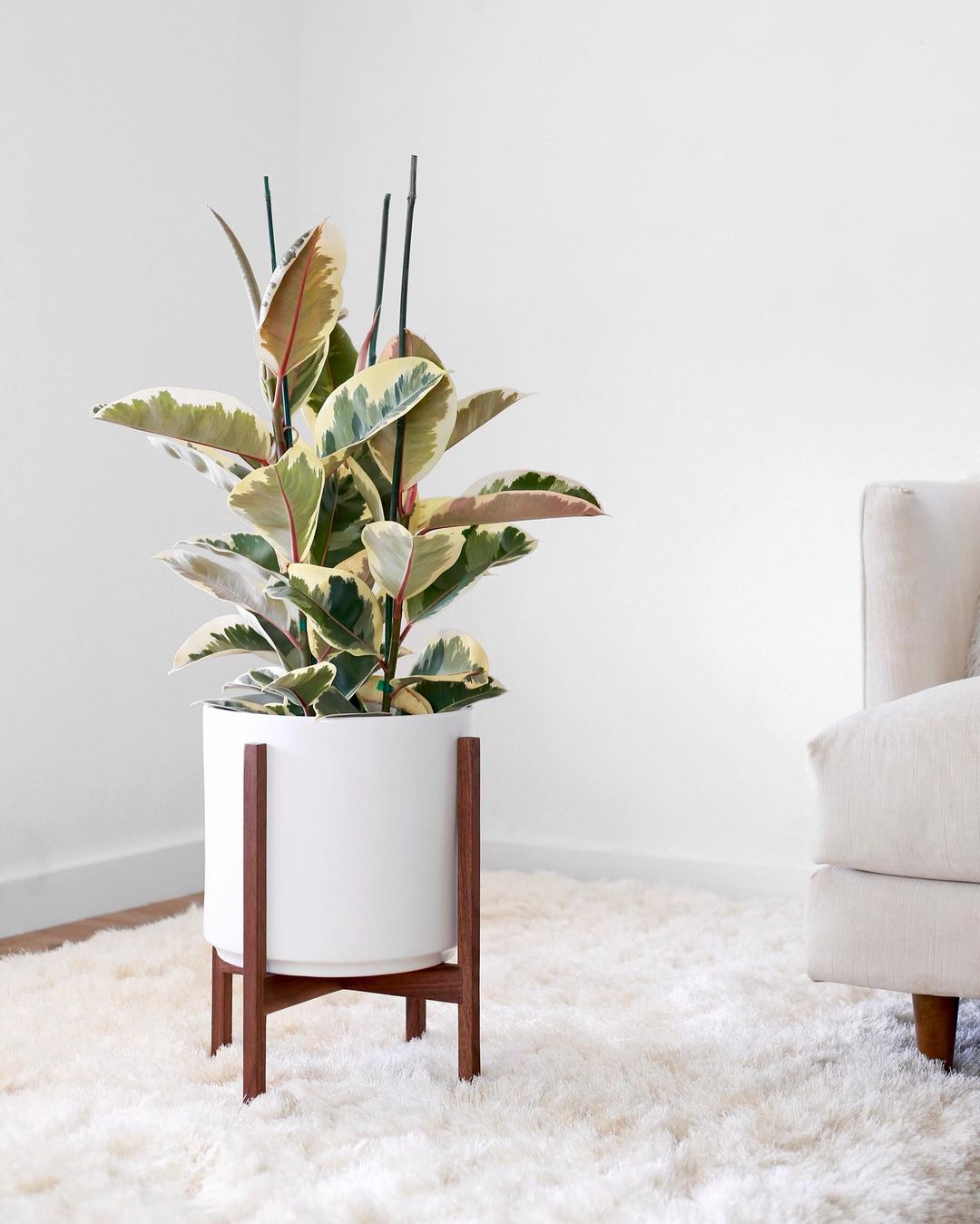
Put protective glass on the glass that scatters the light, so you can leave it on the windowsill without fear. If you notice that the leaves fall off and become dry and lose their mottled colors, you should pay attention to the lighting – it means not enough sunlight.
Watering

To keep your variegated rubber plant healthy, water it regularly. The optimal watering regimen is 5/7 days in summer and 10/14 days in winter. It is also important to check that the soil itself is dry before watering. To do this, you can put your finger down and feel the soil. If it’s 1/2 inch dry, it’s time to water the plant. Be sure to get the plant a pot with drainage to allow water to drain out of it. Water the plant deeply so that water flows out from the bottom. Try to touch the leaves less, and better to pay attention specifically to the root system and stem.
Leaf care
The plant can have very thick leaves that need to be wiped down with a damp cloth every few weeks to remove accumulated dust, but if the dust accumulates early, it needs to be cleaned more often. After all, the dust will prevent sunlight from reaching the leaves, which can affect its mottling.
Soil
Be sure to choose soil that has good drainage. Such soil will not retain water, but will gently let it pass through, which is extremely useful for a variegated rubber plant. You can mix 1/3 potting mix, 1/3 perlite and 1/3 cactus soil together to get the perfect mix for the plant. Or simply purchase a ready-made mix at a florist shop.
Temperature

The mottled rubberonose plant prefers warm temperatures and does not tolerate cold drafts. If the temperature drops below 60 degrees Fahrenheit, the leaves will begin to turn brown and fall off. The ideal temperature is considered between 65 and 80 degrees Fahrenheit.
Transplanting
The mottled rubberonose variegate will require you to transplant it when it is 1 or 2 years old. When you notice that the plant has stopped growing, or that it is beginning to show small powders in the soil, it is time to transplant it. The new pot should be 2/3 of an inch larger than the previous pot. Be sure to put fresh and new soil in the pot, and do not use soil from the old pot. After transplanting, water your plant well.
Popular questions and answers
What diseases are prone to variegated rubber plant?

This plant is susceptible to root rot and leaf spotting. It is also susceptible to mealy bugs, scale mites, and spider mites. Root rot is easily prevented by watering the plant properly and not allowing it to stand in water. Well-drained soil and a pot with drainage are also important. It is important to watch out for pests, where at the first sign it is worth treating the plant with a special insecticide solution bought at a gardening store against mealy bugs and mites.
Is the mottled rubber plant poisonous?
The mottled rubber plant is not poisonous, but it can cause stomach upset if ingested. The sap of the plant is also a skin irritant, so it’s best to keep it out of reach of children and pets. Despite its potential dangers, the mottled rubber plant is still a beautiful addition to your home.
What does the mottled rubber plant smell like?
The mottled rubber plant has a strong, distinct smell that is hard to describe. Some say it smells like moldy cheese, while others say it smells earthy or musky. Regardless of how you describe the smell, it is definitely unique and not something that everyone will enjoy.
Why have variegated rubber plant twisted and wrinkled leaves?

This indicates that you are watering the plant too little and not enough moisture to nourish the leaves. Try to adjust your watering regime and keep an eye on the plant.
Why do mottled rubbery-leafed plants have small leaves?
The mottled rubber plant (Ficus elastica) is a great addition to your home, with its glossy leaves and interesting mottled patterns, but sometimes its leaves can get small and not grow. This indicates that the plant is getting too little sunlight. So think of a new location for your pet in a window, or elsewhere in the apartment or house, so it starts to get enough light.
What is that white sap that flows from the leaves variegated rubber plant?

The white sap is actually latex. Latex is a sticky, milky substance that flows from the plant when the leaves are cut or damaged. It’s interesting to note that rubber plants are not the only source of latex; it can also be found in dandelions, figs, and even some grasses!
