
Looking for an interesting and unusual houseplant? Why not try propagating rubber trees! These plants are easy to care for, and can thrive in a variety of conditions. In this comprehensive guide, we will teach you everything you need to know about propagating rubber trees. We will cover everything from planting seeds to caring for your new plants. So, whether you are a beginner or a seasoned gardener, read on to learn more about propagating rubber trees!
Rubber trees features

Rubber trees are a popular and hardy indoor plant that is relatively easy to care for. They can grow up to 30 feet tall in the home, but can easily be pruned to make them smaller. These plants have thick green leaves with white veins. They produce small white flowers and have attractive brown bark.
Rubber trees are native to tropical regions of Southeast Asia, where they like to grow in groups. If you provide the rubber tree with ideal conditions and grow them outdoors rather than indoors, they can grow up to 100 feet. In home growing conditions, rubber plants always need timely pruning, so they don’t grow too big. Plus, pruning helps you propagate the plant and give it any shape you want.
You can read about how to properly care for the rubber tree here.
When is the best time to propagate a rubber tree?
The best time to propagate a rubber tree is during the spring or summer months when temperatures are warm and days are long. This ensures that your new plants will have enough light and heat to grow. You can also propagate rubber trees in late fall, but it is important to avoid cold winters, as this can damage the plant and put it under stress.
Caution when propagating a rubber tree

When propagating rubber trees, care must be taken to ensure the health and safety of both the plants being propagated and the environment. The fact is that such a plant contains a viscous white sap that is rich in latex. This substance can cause skin irritation and, if swallowed, mild poisoning. It is important when propagating the rubber tree to perform the entire process with gloves.
How to propagate a rubber tree
Cuttings

Cuttings are the best way to propagate rubber trees. You will need sharp scissors or garden pruning shears, the obligatory gloves on your hands, rooting hormone, a pot of potting mix and perlite for rubber plants.
You will need to inspect your plant and find a healthy stem with undamaged leaves that is easy to cut. Remember that when you cut the stem, it is from the leaf node that a new plant will grow, so cut so that you do not damage this area. The ideal cuttings size is 15 cm in length and should have a few leaves.
When the cuttings are cut, leave just one leaf on top and plant the cuttings in the soil. The pot should be small with already prepared soil mixture and perlite. Be sure to water the soil liberally. Do not forget to dip the tip of the cuttings in rooting hormone before planting.
To make the process go faster, it is important to create a high humidity for the cuttings, so cover the pot and the cuttings with a plastic bag. Put the pot in a sunny and warm place, but make sure that it is not exposed to direct sunlight. It is very important not to let the soil dry out, so try to always moisten it.
Reproduction of a rubber plant in water
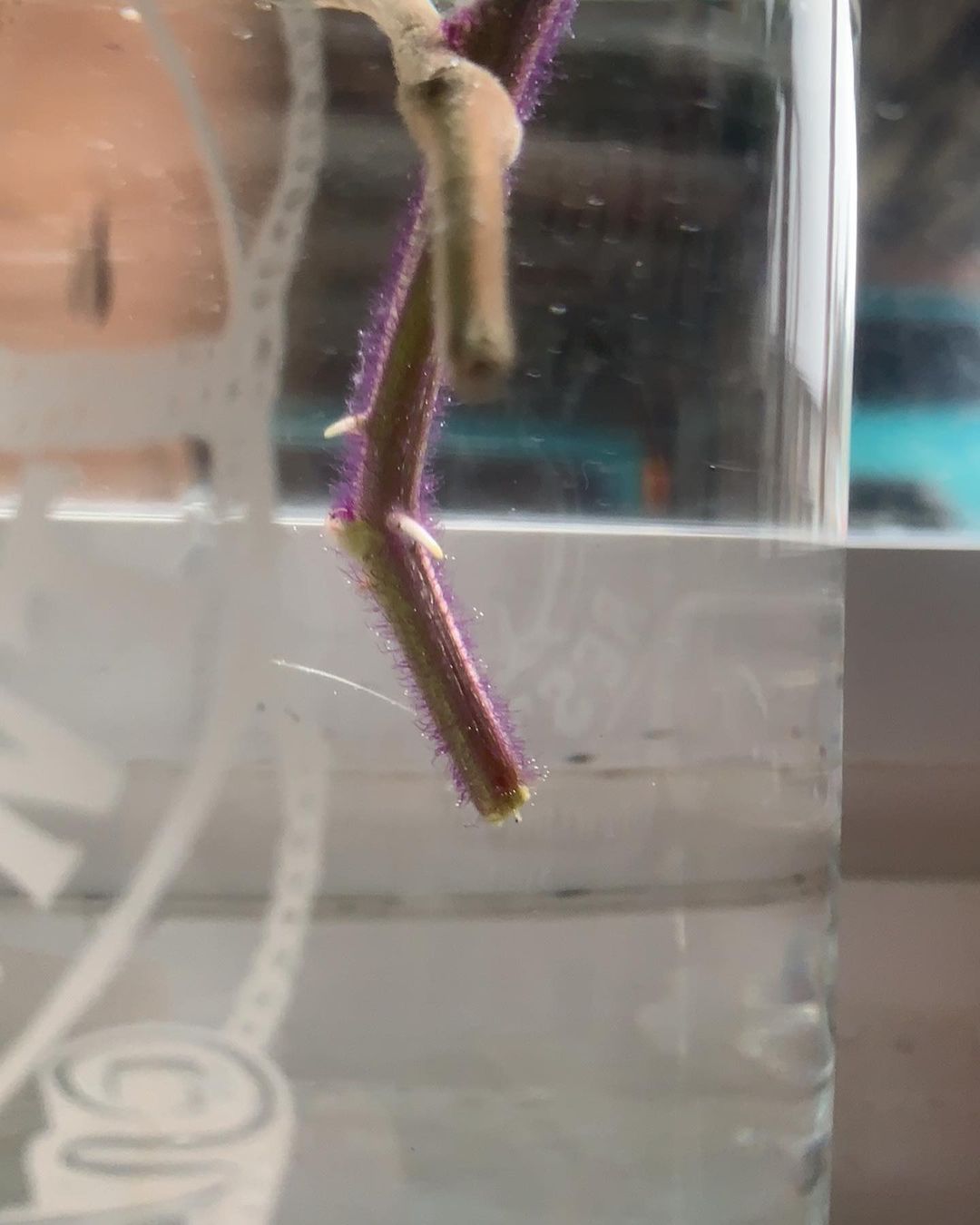
This method is not as effective as the others and if you do something wrong, you can ruin the stem because rubber plants are very prone to root rot.
It is very important to do all the work with clean gloves and clean tools. First you need to carefully cut the selected stem from the plant, in the same way as the cuttings method. Wait until the white sap has completely drained from the stem, and then immerse it in water, where the leaf node should be completely in it. To grow a rubber plant from a stem in water, a regular glass jar half or more full of clear water will work well.
It is important to provide the stem with bright but indirect sunlight and heat. The water should be changed every three days so that it does not become muddy. The process of root development, in this method is delayed and the first roots will not grow until a couple of weeks or maybe a month later. When the roots are 1 to 2 inches long, the seedling can be transplanted into a pot of soil.
The method of aerial plucking
Another way to propagate rubber trees is aerial pruning, which is probably the easiest. This method requires a healthy stem with several fully developed leaves and scissors. The stem itself must not be less than 12 inches long, or the process can be very slow. Then choose a spot on the stem where the rooting process will take place and cut off some of the leaves in this area.
The method involves creating a ring on the stem free of leaves and soft peels. The soft rind will be easy to remove with a sharp scalpel. When you get to the hard base, you should not touch it. Next, pour the rooting hormone on the resulting ring and cover it with damp sphagnum moss. The moss can be attached to the stem with garden plastic rings or strips. After 3 weeks, when roots appear from the ring, you can cut off the unwanted part and transplant the new plant into the soil.
What is the advantage of the rubber plant?
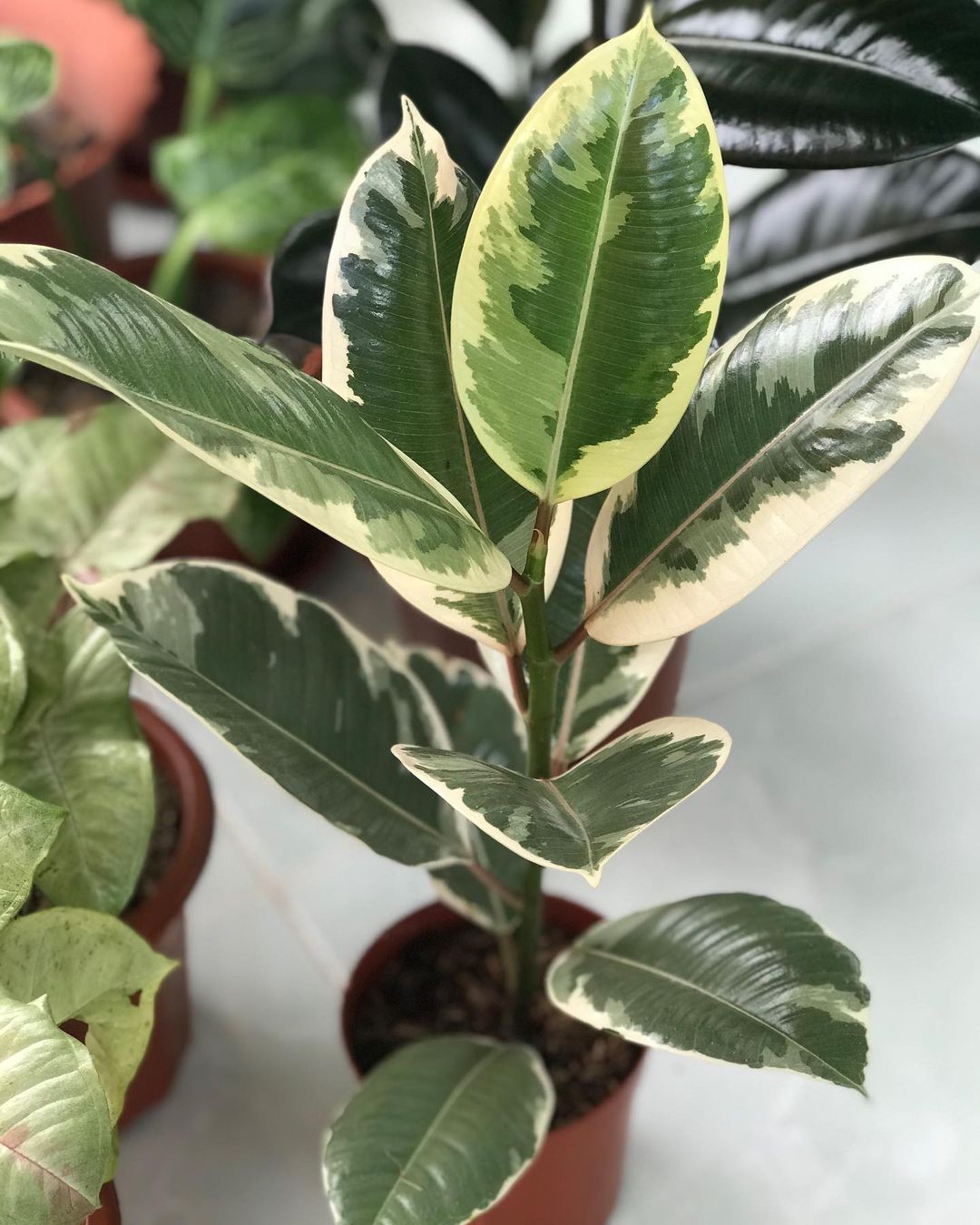
A very important advantage is that rubber plants do not release harmful substances that can cause allergic reactions in humans. It is the rubber plants that do not produce pollen, which is most often what people are allergic to, and do not emit odors.
Rubber plants are great at keeping dust out of the air and help raise the humidity naturally. Such a plant does not require delicate care, so it is very easy to grow at home.
