
Hello, green thumbs and lawn lovers alike!
A lawn is not just about lush green grass underfoot or the occasional daisy popping its head up on a sunny day. It’s about balance, harmony, and, of course, a touch of science. Today, let’s delve into one of the most underrated yet crucial aspects of lawn care: pH balance.
Understanding pH Balance
At its core, the pH scale measures the acidity or alkalinity of our soil, with 7 being neutral. Picture it like a garden-themed seesaw. On one side, we have acidity, and on the other, alkalinity. A perfect balance sees your seesaw level, but if it tips too much one way or the other, your grass might just throw a little tantrum!
A well-balanced pH ensures that your lawn can absorb nutrients efficiently, resulting in that lush green carpet you’ve been dreaming of. Too acidic or too alkaline, and your lawn might start showing signs of distress. Think of it like feeding a gourmet meal to someone with a stuffy nose – they just can’t fully appreciate or absorb all those delicious flavors.
Enter Lime: The Lawn’s Best Friend
So, where does lime fit into this seesaw scenario? Lime acts like the gentle hand that nudges the seesaw back to equilibrium. When our lawns get a bit too sour – err, acidic – lime steps in to sweeten things up.
Apart from its primary role of balancing pH, lime has a trove of benefits:
- Nutrient Boost: It provides essential nutrients like calcium and magnesium.
- Soil Structure Savior: Lime can improve the physical properties of your soil, making it friendlier for roots to expand and thrive.
- Worm Welcomer: Earthworms, nature’s little gardeners, prefer a neutral pH. A balanced lawn could see an increase in these helpful critters.
Now, while sprinkling lime on your lawn might sound like a piece of cake, or pie, or whatever your garden snack of choice is, there’s a science to it. Too little and it’s a wasted effort, too much and you might end up over-sweetening the deal.
Stick around as we dig deeper into the ‘why, when, and how’ of lime application, ensuring you’re armed with all the knowledge to give your lawn the TLC it deserves.
Understanding Soil pH and its Importance
Gather around, green guardians, because it’s time to have a heart-to-heart with our lawns from a scientific standpoint. Don’t worry, I’ll make sure it’s more delightful garden chat and less snooze-worthy lecture!
What Exactly is pH?
Let’s break it down. pH stands for ‘potential Hydrogen.’ I know, I know, it sounds like something out of a high school chemistry class, but stay with me. Imagine pH as a party scale. On one end, we’ve got the acid-loving attendees (those are the ones munching on sour candies) and on the other, the alkaline aficionados (sipping on herbal teas). The scale ranges from 0 to 14.
- 0-6: Acidic (The Sour Side)
- 7: Neutral (The Cool Cucumber in the Middle)
- 8-14: Alkaline (The Herb-Tea Harmony)
So, when we talk about soil pH, we’re essentially asking, “Hey, how’s the party in my lawn going? Too many sour candy fans or just the right mix?”
When Things Get Too Sour
A too-acidic pH (think below 6) can give your lawn some hiccups:
- Nutrient Lockout: Essential nutrients like phosphorus, potassium, and magnesium become less available.
- Weed Welcome: Weeds and certain diseases love acidic soils. It’s like rolling out a red carpet for unwanted guests.
- Microbial Mayhem: Beneficial microbes might pack their bags and leave, and we really don’t want that. They’re the unsung heroes keeping our lawn healthy from beneath.
Striking the Right Note: Optimal pH for Lawns
While different grass types have their own pH sweet spots, a good rule of thumb for most lawns is a pH between 6.2 to 7.2. It’s like the Goldilocks zone – not too acidic, not too alkaline, but just right.
However, local conditions, grass species, and even the type of fertilizer you use can play a role in this ideal number. But as long as you’re in that ballpark, your lawn is set for some show-stopping growth.
Reasons for Lime Application
Ah, lime. Not just a zesty addition to our drinks or a tangy fruit in our gardens, but also a bona fide superhero in the world of lawn care. But what prompts us to welcome this marvel onto our lawns? Let’s unravel the mystery.
1. Counteracting Acidifying Factors
Life throws lemons at our lawns – well, not actual lemons, but acidifying elements that can make the soil more acidic. Factors such as:
- Rainfall: Yes, even nature’s sprinklers can sometimes wash away the basic elements in the soil, increasing acidity.
- Decomposing Organic Matter: Those fallen leaves might look picturesque in autumn, but as they break down, they can turn the soil sour.
- Certain Fertilizers: Over-enthusiastic fertilizing, especially with ammonium-based fertilizers, can be an acid trip for your lawn (and not the fun kind!).
Lime plays the role of the buffer, neutralizing these acidifying elements and restoring balance. It’s like having a reliable friend who always brings a good mood to balance out the occasional party pooper.
2. Boosting Calcium and Magnesium in Soil
Think of lime as a dietary supplement for your lawn. It doesn’t just work its balancing magic; it also adds essential nutrients:
- Calcium: Vital for cell growth in plant roots and leaves.
- Magnesium: A crucial component for photosynthesis and overall plant vigor.
In a way, lime acts like that refreshing green smoothie for your lawn – packed with goodness and ready to invigorate!
3. Enhancing Soil Structure and Microbial Activity
Lime’s benefits are more than skin (or should I say, grass?) deep:
- Improves Soil Texture: Lime can convert dense, compacted soil into a fluffy, friable paradise for roots.
- Boosts Microbial Parties: By adjusting the pH, lime makes the soil more hospitable for beneficial microbes. And trust me, you want these tiny gardeners at work; they help break down organic matter and enhance soil fertility.
4. Optimizing Nutrient Uptake for Grass
Ever fed your lawn with top-notch fertilizers and wondered why the results aren’t showing? The pH could be the party pooper. Lime ensures that the soil pH is in the optimal range for your grass to access and utilize nutrients efficiently. It’s like ensuring your lawn has the perfect pair of glasses to read its favorite nutrient-rich book.
Types of Lime Used for Lawns
It’s lime time! (I couldn’t resist.) If you thought lime was a one-size-fits-all kind of deal, you’re in for a citrusy surprise. There are different varieties tailored for specific lawn needs. So, let’s don our botanist hats and explore the world of lawn lime varieties.
1. Calcitic Lime (Calcium Carbonate)
Origin: Derived primarily from limestone, calcitic lime primarily offers a generous dose of calcium to your lawn.
Pros:
- High Calcium Content: Superb for lawns that are calcium-deficient.
- Quick Reaction Time: Starts the pH balancing act relatively quickly.
Cons:
- Lacks Magnesium: Not ideal for soils that also need a magnesium boost.
- Requires Regular Application: Its quick action might mean more frequent applications.
2. Dolomitic Lime
Origin: Another limestone derivative, dolomitic lime brings both calcium and magnesium to the garden party.
Pros:
- Dual Nutrient Boost: Offers both calcium and magnesium, making it a 2-in-1 package.
- Long-Lasting: Its effects can be sustained over a more extended period.
Cons:
- Slower Reaction Time: Takes its sweet time to change the soil pH. It’s the laid-back guest of the lime world.
- Overuse Concerns: Continuous use without checking magnesium levels can lead to a nutrient imbalance.
3. Hydrated/Pelletized Lime
Origin: This is calcitic or dolomitic lime that’s gone through additional processing, hydrating it to form pellets.
Pros:
- Rapid pH Adjustment: If you’re in a hurry, this is your go-to lime. It acts almost instantly.
- Easy Application: The pelletized form can be a dream to spread uniformly over lawns.
Cons:
- Short-lived Effects: You might need to reapply sooner than with other types.
- Potential Burn Risk: Being potent, there’s a risk of “burning” the lawn if applied too generously.
| Type of Lime | Primary Nutrients | Reaction Time | Ease of Use | Duration |
|---|---|---|---|---|
| Calcitic Lime | Calcium | Quick | Moderate | Short-term |
| Dolomitic Lime | Calcium & Magnesium | Slow | Moderate | Long-term |
| Hydrated/Pelletized Lime | Depends on origin | Rapid | Easy | Short-term |
Determining Lime Needs Through Soil Testing
We’ve talked lime varieties and their star-studded benefits. But how do you determine just how much of this zesty savior your lawn needs? Picture this: Lime is like the seasoning to your lawn’s gourmet dish. Just as you wouldn’t douse a dish in salt without tasting, you wouldn’t lavish lime without testing. Enter the world of soil tests!
The Pivotal Role of a Soil Test
Imagine having a crystal ball that peers into the soul of your soil, revealing its deepest desires (or deficiencies). That’s a soil test for you.
- Precision: It tells you exactly what your soil’s pH is. No guesswork, just cold, hard, science-y facts.
- Nutrient Knowledge: Beyond pH, you’ll discover if your lawn is partying with plenty of phosphorus, kicking it with enough potassium, or mingling with the right amount of magnesium.
DIY Soil Test Kits vs. Professional Soil Testing
DIY Kits: The kind of kits you’d find at your local garden store. Think of them as the home-cooked meal of soil tests.
Pros:
- Immediate Results: Quick and gives you a general idea of your soil’s status.
- Budget-Friendly: A pinch on the pocket compared to the professional route.
Cons:
- Less Detailed: Might not offer the in-depth analysis a lawn aficionado craves.
- Accuracy Concerns: Can sometimes resemble that occasionally unreliable weather app.
Professional Testing: Sending your soil sample to a lab or extension service. It’s the five-course meal at a fancy restaurant of soil tests.
Pros:
- Detailed Analysis: Like getting a full health check-up for your lawn.
- Expert Recommendations: They often come with tailored advice for your specific soil situation.
Cons:
- Takes Time: The results aren’t instant; it’s like waiting for a gourmet dish to be prepared.
- Costlier: A bit more of an investment, but remember, knowledge is power (and in this case, lawn lushness)!
Deciphering Soil Test Results
Received your results and feeling a bit like you’re reading hieroglyphics? Fear not!
- pH Level: The star of the show. Remember our ideal 6.2 to 7.2 range? Check where your lawn stands.
- Calcium & Magnesium Levels: Especially crucial if choosing between calcitic and dolomitic lime.
- Recommendations: Many tests will give you a per-square-foot lime recommendation. It’s like a personalized recipe for lawn success.
Steps to Calculate Lime Requirements
Alright, green thumbs! We’ve peeked into the soul of our soil. Now, it’s crunch time (or should I say ‘crush’ time, considering we’re dealing with crushed limestone?). Let’s unravel the mathematical mystery behind lime application. Remember, it’s less about ‘how much lime can we throw down’ and more about ‘how much does my lawn truly need?’
1. Finding the Desired pH Level Based on Grass Type
Different grasses, just like us after three cups of coffee, function best at specific pH levels:
- Cool-Season Grasses (e.g., Kentucky Bluegrass, Fescue): Ideally like it between 6.2 – 7.0.
- Warm-Season Grasses (e.g., Bermuda, Zoysia): Prefer to chill in the 6.0 – 7.0 range.
The first step is to identify which star-studded grass variety graces your garden and aim for its pH sweet spot.
2. Calculating Lime Needs Based on Soil Test Results
Your soil test result will be the guiding light here. Typically, these results come with lime recommendations. However, as a general rule:
- If your pH is 1 point below the ideal, you might need 2 to 3 lbs of lime per 100 sq ft.
- Every additional point of pH deviation might require another 2 lbs of lime per 100 sq ft on top.
(Remember, these are ballpark figures. Always rely more on your test results and consult local experts if in doubt!)
3. Factors Affecting Lime Application Rates
While your test result is a solid starting point, several factors can swing the lime amount pendulum:
- Soil Texture:
- Sandy Soils: These lightweight champs require less lime. Imagine them as featherweight boxers: quick to react but don’t pack as much of a punch.
- Clayey Soils: The heavyweights. They need more lime, but they hold onto its effects for longer.
- Current pH:
- The greater the gap between your current and desired pH, the more lime will be needed to bridge that chasm.
- Desired pH:
- If you’re aiming for a higher end of the pH range, you’ll naturally need a bit more lime to reach that peak.
Application Tips: Lime Like a Pro
Alright, my lawn-loving comrades! You’re equipped with the lime knowledge. Now, it’s time to get down and dirty (quite literally) and sprinkle that magic dust. The way you apply lime is as crucial as the quantity. So, buckle up, and let’s venture into the zesty world of lime application.
1. The Perfect Lime-time: When to Apply
- Spring & Fall: These temperate seasons are lime’s favorite. The ground isn’t too hard, the temperatures aren’t extreme, and the lime can integrate gracefully before peak growing periods.
- Avoid Peak Summer: Lime doesn’t enjoy sunbathing as much as we do. Extreme heat can stress the grass and hinder lime’s effectiveness.
- After Aeration: If you aerate your lawn, that’s a prime time! The soil will be more receptive, almost like opening its arms wide for a limey embrace.
2. Methods of Lime-tastic Application
Depending on your lawn size, shape, and personal preference, there’s a lime application style just for you:
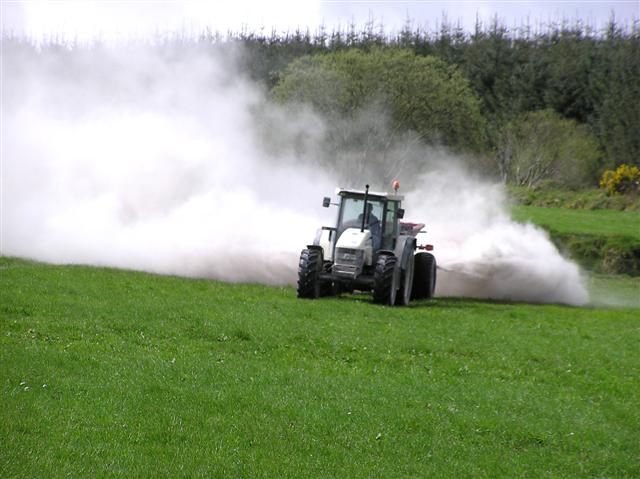
- Broadcast Spreader: This is like the confetti cannon of lime application. It throws the lime in a wide arc, making it perfect for larger lawns. Remember, the key is walking at a steady pace to ensure uniformity.
- Drop Spreader: Think of this as the meticulous artist, dropping lime in a precise path. It’s ideal for smaller spaces or oddly shaped lawns where precision is paramount.
3. Ensuring Even Coverage
No one likes a patchy lawn. To ensure your lawn looks uniformly fabulous:
- Calibrate Your Spreader: Before going all out, test your spreader on a small patch. Adjust settings to get the desired application rate.
- Overlap Passes Slightly: Whether you’re walking in rows or columns, a slight overlap avoids lime-less gaps.
- Split Your Lime Quantity: Apply half of the lime walking in rows and the other half walking in columns. It’s like double-coating your lawn for that flawless finish.
4. Post-Application Hydration: Watering After Lime
After sprinkling that lime, your lawn will be a tad thirsty:
- Gentle Watering: Give your lawn a light drink. This helps the lime penetrate and start its magic, but without washing it away.
- Avoid Heavy Rains: If there’s a downpour forecasted, maybe delay your lime day. Too much rain can make your hard work go down the drain (literally).
Potential Risks and Mistakes to Avoid: Lime Isn’t Always Sublime
Alright, lawn legends! Just as every rose has its thorn, lime has its own potential pitfalls. While it’s a fabulous soil enhancer, it demands respect. So, before you set forth with your spreader in tow, let’s explore the shadowy side of liming and how to dodge these common missteps.
1. The Danger of Over-Application: Less Can Be More
Imagine drenching your fries in salt. Sounds overkill, right? Similarly, your lawn can get overwhelmed with too much lime.
- Effects: Over-liming can swing your soil’s pH too high, creating a harsh alkaline environment where nutrients get locked away from your grass.
- Solution: Always adhere to your soil test recommendations and retest annually. Remember, it’s easier to add more later than to fix an overdose.
2. A Lime by Any Other Name: Choosing the Wrong Type
It’s not just about how much but also what kind. Choosing the wrong type of lime can be like giving a cat a dog treat. Oops!
- Calcitic vs. Dolomitic: If your soil is low in magnesium, dolomitic lime might be the answer. But if magnesium levels are fine, then opt for calcitic lime.
- Pelletized vs. Powdered: While pelletized lime is easier to handle and spreads more evenly, it’s often pricier. Powdered lime can get a tad messy but is generally more budget-friendly.
- Solution: Check both your soil’s pH and nutrient levels. And consider the practicality of application in your decision.
3. The Overenthusiast Error: Applying Lime Too Frequently
Just as one doesn’t chug coffee cups back-to-back (or at least, shouldn’t), it’s best to space out lime applications.
- Effects: Consistent over-application over time can lead to soil compaction, reduced aeration, and an unhappy lawn ecosystem.
- Solution: Aim for a liming session every couple of years unless soil tests suggest otherwise. Treat lime as an occasional lawn spa day rather than a daily routine.
Monitoring and Maintenance: The Evergreen Road to Lawn Nirvana
Bravo, turf tenders! You’ve sprinkled, spread, and serenaded your lawn with the best lime practices. But like any masterpiece, your lawn requires occasional check-ins and touch-ups. It’s a living canvas, ever-changing and evolving. So, let’s deep dive into the after-lime-life and ensure your green remains the envy of the block.
1. The pH Patrol: Retesting Soil Regularly
- Why? Over time, rain, decomposing materials, and other natural factors can cause your soil’s pH to shift. Regular check-ins help you keep tabs and act accordingly.
- How Often? Once a year is a good rule of thumb. Consider it your lawn’s annual health checkup.
- Tip: Try testing different parts of your lawn. Just like us, lawns can have mood swings, and different spots might have varying pH needs.
2. Stay Flexible: Adjusting Lime Application Based on Changing Needs
- Why? Nature is dynamic. As trees grow, new plants get added, or rainfall patterns change, your lawn’s lime requirement might evolve.
- Adapt: If your soil tests lean towards alkalinity, you might need to pull back on lime and consider sulfur applications to gently lower the pH.
- Be Observant: Keep an eye out for moss growth or a yellowing lawn. These can be silent screamers of pH imbalances.
3. A Balanced Lawn Diet: Complementing Lime with Other Care Practices
Lime is just one piece of the lawn care jigsaw. For a picture-perfect lawn:
- Fertilize Judiciously: While lime addresses pH, fertilizers feed your grass with essential nutrients. The two go hand in hand, like peanut butter and jelly.
- Regular Aeration: This helps the soil breathe, making it more receptive to lime and other treatments.
- Mowing: Keep blades sharp and avoid mowing too short. A taller lawn shades the soil, reduces moisture loss, and combats weeds.
- Watering Wisdom: Deep, infrequent watering encourages robust root growth. Aim for an inch of water weekly, either through rain or irrigation.
FAQ Section: Getting to the Roots of Your Lime Queries
Lime, lawns, and lingering questions – oh my! We’ve traveled the long and winding garden path, but sometimes, those niggling questions persist. Fear not, grass guru, for this FAQ section is the treasure trove of turf truths you’ve been waiting for.
1. Why is my lawn’s pH level so important?
Soil pH is like the heartbeat of your lawn. It determines nutrient availability. Too acidic or alkaline, and nutrients get shy, hiding away from your grass. Balanced pH means a vibrant, thriving lawn.
2. How often should I test my soil’s pH?
Aim for a yearly checkup, just like you’d visit the dentist. Early spring or fall is prime testing time.
3. Can I apply lime at any time of the year?
Spring and fall are the golden periods. Avoid the scorching summer sun and the deep freeze of winter. Lime prefers the moderate middle.
4. How long after liming can I fertilize my lawn?
Give it a couple of weeks. Think of lime as the appetizer and fertilizer as the main course. You wouldn’t rush through a gourmet meal, right?
5. What if I add too much lime?
Over-liming can make the soil too alkaline. If this happens, consider adding sulfur or organic matter to gently rebalance the pH.
6. Can I use lime to treat other garden areas, like flower beds?
Absolutely! But, like tailoring an outfit, customize the amount. Different plants have unique pH preferences.
7. How soon after application will I see results?
Lime is a slow and steady friend. Visible changes can take a few months, especially if pH adjustments were major.
8. Are there alternatives to lime for raising pH?
Indeed! Wood ashes or crushed eggshells can be used. However, they’re less predictable and consistent than lime.
9. How does rainfall or watering affect lime’s efficiency?
Moderate watering or rainfall helps lime penetrate the soil. But downpours? They might wash away your hard work. Check the forecast before application!
10. Can I mix lime with other lawn treatments?
While it’s tempting to multitask, lime prefers the spotlight. Give it its own day, especially separate from fertilizers.
And there we have it, green thumbs galore! A journey from understanding pH’s pivotal place in your lawn’s life to mastering the magic of lime. Your lawn isn’t just a stretch of green; it’s a canvas, a testament to your care, and a patch of earth brimming with potential. So, take a bow, equip that spreader, and remember – with every sprinkle of lime, you’re not just adjusting pH. You’re cultivating dreams, one grain at a time.
