
Managing a lawn can be tedious if you don’t have the proper equipment to use. Good thing, some machines can help you speed up grass cutting and enhance your yard.
If you have a wide yard to maintain, you need to invest in a quality lawnmower. Lawnmowers cut the grass surface evenly and efficiently without so much physical exertion. Simply run the engine and operate it as instructed.
But like any machine that uses oil for lubrication, a lawnmower engine is prone to damage if there’s too much oil in it. If the machine is overfilled with oil, the engine won’t fire up and function as expected. This will lead to overheating in the engine or worse, the crucial parts of the engine getting damaged beyond repair.
It’s important to know why too much oil is not good for your lawnmower. Of course, you don’t needlessly want to spend some cash to buy a new one.
In this guide, you’ll learn to spot some warning signs of oil overfill in your lawnmower and how to fix it to avoid further damage.
Why too much oil is bad for your lawnmower
Oil overfill in your lawnmower is not a matter to be taken lightly. When there’s too much oil, the engine would be forced to work harder, which leads to overheating.
Moreover, extra oil can spill into the crucial components of the machine, leading to more serious engine problems. For example, having too much oil can affect the motion of the crankcase, creating disturbing vibrations as you mow. It could also break the piston rings, seals, and gaskets, which will necessitate costly replacements. Worst of all, the engine can be permanently ruined where the crankshaft repeatedly strikes the overflowing oil while the engine is running.
Furthermore, excess oil can leak onto any surface where the mower sits. Because the fluid is flammable, this can create a fire or environmental hazard. It can also pose a threat to your health, especially your lungs if you accidentally breathe in the smoke the engine emits as a result of heat buildup.
How to Identify Oil Overfill
The easiest way to identify if there’s oil overfill is to use the dipstick attached to the cap to check the oil level. The dipstick usually has two marks or two holes indicating the maximum and minimum levels. The normal oil level should be between these two marks; too high or too low oil level is bad for your lawnmower engine.

Other than using the oil dipstick, here are the other warning signs that you should not ignore:
- White Smoke – The muffler blowing white smoke indicates that the engine is trying to burn the surplus oil.
- Oil spill in the mower’s exhaust valve – An overfilled crankcase can also cause the excess oil to leak into the mower’s exhaust valve.
- Oil leakage in the carburetor – This is what happens when you tilt your mower in the wrong direction or run it across hilly terrain.
- Oil drips in the air filter – Usually, the air filter gets soaked in oil if the mower is turned over on the wrong side, causing excess oil to seep into the other parts of the engine.
- Slow, irritating starts – if there’s too much oil in the tank, you’ll find it hard to start the machine.
How to Remedy the Situation
The immediate solution for oil overfills is to drain the excess oil from your lawnmower. This task can be done without the help of a service professional, except when too much oil has already put your lawnmower into a bad condition. That said, here are the general guidelines to remove excess oil from the lawnmower:
- Using a clean cloth or rag, wipe the area around the crankcase to prevent smudges or dirt from entering the crankcase when you open the drain plug.
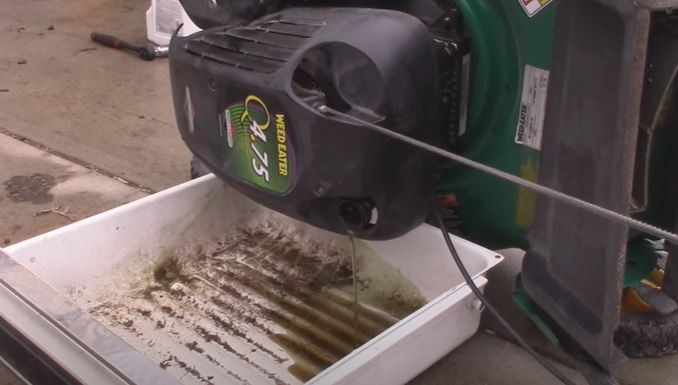
- Unscrew the plug and start emptying the oil. Tilt the machine on its side and place an oil drainage pan or container to collect the oil beneath the mower. Make sure the crankcase has no more oil left.

Image courtesy of Hank’s Garage from YouTube Pro Tip: If you don’t want to tip your mower to pour out the oil, a good alternative is to use a fluid extractor. Better yet, you can make a DIY oil extractor using any material you can find in your home.
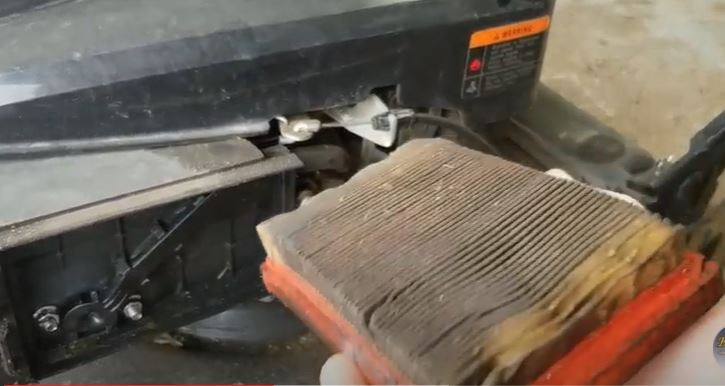
- Once the excess oil has been drained, check the air filter of your mower. If it’s too dusty or oily, it’s time to change it. While some suggest that air filters last for 300 hours of mowing operation, it’s your judgment call if it needs immediate replacement or not. You may replace the filter at least once every season, but that depends on how frequently you use your lawnmower.

Image courtesy of Brant Small Engine Repairs from YouTube - Dispose of the drained oil safely to avoid environmental hazards like fire and to prevent it from causing patches on your lawn.
How to Prevent Adding Too Much Oil to Lawn Mower
A lawnmower typically needs between 16 to 20 ounces of engine oil. However, the oil requirement still depends on the type and size of your lawnmower. To prevent issues with excess oils, you have to read the instruction manual of your lawnmower to know the specific oil requirement. Regardless, it’s essential to keep it adequately lubricated.
The oil dipstick attached to the cap will let you know the volume of oil needed to fill up the crankcase, so use it often to check the oil level. It’s best to check the oil level indication when the engine has cooled from the recent mowing operations so you can accurately assess the amount of oil left. You can add a little oil at a time and then check the oil dipstick to see whether or not the oil level falls within the safe range.
Conclusion
A lawnmower is a great companion to make grass trimming easier and stress-free. That’s why you have to make sure your mower is always in good shape. It’s equally important to know the right amount of oil to use to keep the engine running smoothly and efficiently.
Since the major setback is oil overfill, you have to take immediate action to avoid causing more harm to the lawnmower. It helps to check the oil level time and again before starting the engine.
Included in the oil requirement is the type of lubricant oil to use. In this case, use only the oil type endorsed by the manufacturer. Using the wrong oil type can diminish lubrication and shorten the engine life of your lawnmower.
Also, be on the lookout for any other warning signs, even after checking the oil level. Chances are, there might be oil drips in some parts of the engine. Always refer to the owner’s manual and read instructions to fix the issues with oil overfill.
Lastly, in case of doubt, contact your service professional. There’s no better alternative than asking for help from an expert rather than trying to fix the problem yourself.
I hope this article helped you a lot. If you have any questions or suggestions that we probably missed, do give us a comment.

Thank you Nicolas! This was very helpful!